

The "Little Queen of Sheba": Arwa al-Sulayhi
(أَرْوَى بِنْت أَحْمَد ابْن مُحَمَّد ابْن جَعْفَر ابْن مُوْسَى ٱلصُّلَيْحِي)
Born: 1048
Died: May 5, 1138
Country: Yemen
Culture or Era: Sulayhid Dynasty

Arwa al-Sulayhi was a trailblazer in every way. She was the first queen of the Muslim world to rule in her own right, and the first woman ever given the prestigious title of Hujjah, the second-highest honor in the religion of Islam. Born in Yemen to a wealthy and well-educated family, Arwa stood out as a bright and curious child who loved to learn. Her family was also cousins of the royal family, making them extremely powerful.
Arwa’s dad passed away when she was young, and she was taken to be raised by her aunt and uncle, King Ali and Queen Asma. So Arwa grew up in the palace in Yemen, a country on the Arabian Peninsula sandwiched between the continents of Africa and Asia. That meant that Arwa was surrounded by different cultures, languages, and ideas from lots of different countries. This was perfect for her because she loved learning, and she got a top-notch international education in history, literature, foreign languages, and religion. When she came to live with them, King Ali told Queen Asma, “treat her kindly, because she will guarantee our generation and will be the guardian of this matter to those who remain.”
"Treat her kindly, because she will guarantee our generation and will be the guardian of this matter to those who remain."
King Ali to Queen Asma about young Arwa
But it wasn’t all books—Arwa also got to meet important Yemeni officials as well as dignitaries from foreign nations. They appreciated her as a smart and capable young woman. These relationships would become important later in Arwa’s life.
Her aunt, Queen Asma became a huge role model for Arwa, who learned much about diplomacy and leadership from her example. It seems Queen Asma was also fond of Arwa, because when Arwa came of age the queen arranged for Arwa to marry her son, the prince al-Mukarram Ahmad. They married when she was eighteen, becoming Princess Arwa. She was now one of the most powerful people in the country.
But just a year later, everything changed. In 1067 her father-in-law, the king, was assassinated by the rival Najahid kingdom, and they kidnapped Queen Asma. The Najahids stashed the queen in a prison and even taunted the queen by hanging her deceased husband’s head in her room, trying to break her spirit. Back in the capital, Arwa and her husband’s lives were thrown into chaos. With the king dead, Arwa was now queen and her husband was king. But her husband did not stay to rule. He immediately set out to avenge his father’s death and rescue his mother. 19-year-old Arwa was now left to rule her kingdom alone.
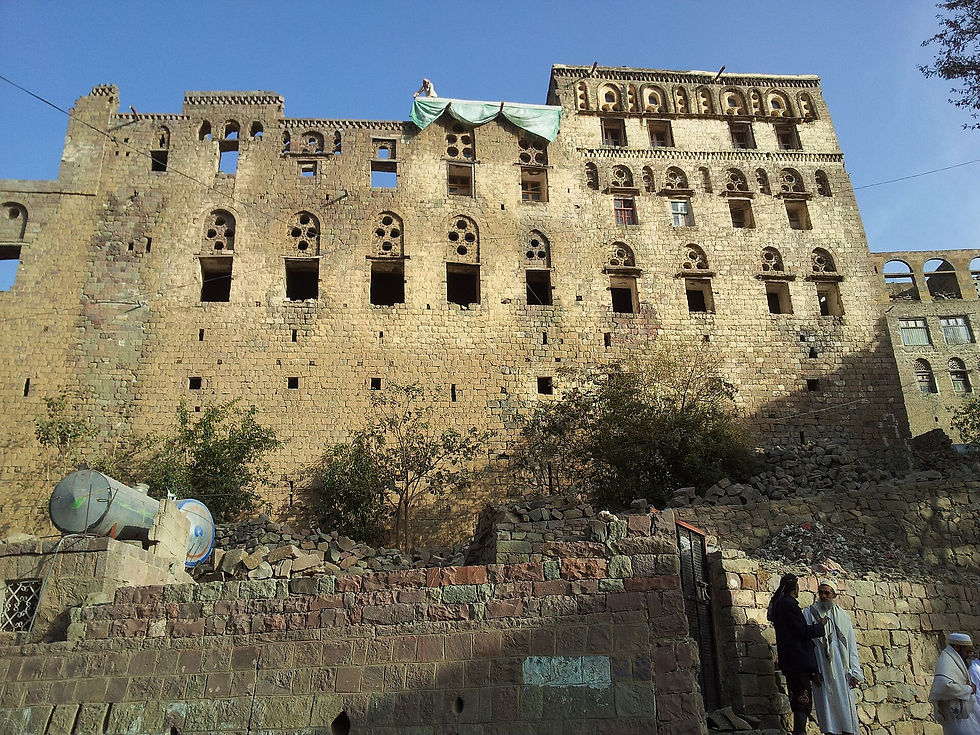
Arwa did not waste any time taking charge. Learning from the Najahid attack, one of her first moves was to relocate the capital from Sanaa to Dhu Jibla, a more strategic spot between upper and lower Yemen, so she could easily reach the whole kingdom. She oversaw the building of a new royal palace and set things in motion for the new capital. She didn’t just sit behind a desk either—Arwa personally led her army to the new capital. She also rejected many of the traditions that were expected of royal women. She refused to hide her face behind a veil, and held her meetings with officials face to face instead of behind a screen, as was tradition.
Many of the officials now under her command had known her in her younger years, so she already had lots of strong relationships in place to hold the country together. This made her leadership a lot more stable in a time when everything could have fallen apart.
Arwa wasn’t just about politics—she also loved the arts. She was passionate about poetry and could recite many poems by heart. She also loved history and commissioned many important texts to be translated. She even commissioned the construction of new buildings for people to gather and share ideas, including schools, libraries, and mosques. Under her leadership, her people were safe, prosperous, and had lives full of beautiful things.

Things took another turn when her husband returned from his quest victorious. He had rescued Queen Asma from the Najahids and brought her safely home. But there was a problem--while the queen was safe and her husband had returned, her husband had been injured in the fight. He might have even been paralyzed in part of his body. With his new physical limitation, he transferred rule of the kingdom over to Arwa.
With the queen’s safe return, Arwa could now enact her own revenge. She rallied her army and marched on the Najahids. The battle was brutal and Arwa’s forces crushed the rival tribe. As a final insult for their treachery, Arwa put their leader’s decapitated head on display at the palace in revenge for what they had done to her mother-in-law.
After the conflict, Queen Arwa brought peace to her land and people. She unified many fragmented tribes of Yemen, expanding peaceful diplomatic relations with other nations, boosted trade, invested in infrastructure, made taxes more equitable, and her funding of the arts created a new wave of music, art, poetry, literature, architecture, and more, enriching the lives of her people and forever elevating her status as a great ruler in history.
Legacy
Queen Arwa is still remembered today as a revered and powerful figure. Her people affectionately gave her the nickname "the Little Queen of Sheba" after another powerful and noble queen in Islam. A private university in Yemen is named after her, and the mosque that she commissioned still stands in Jibla, now also holding the mausoleum where she is buried.



Comments