

Savitribai Phule: India's Revolutionary Educator
Born: January 3, 1831
Died: March 10, 1897
Country: India
Culture: British Colonial India
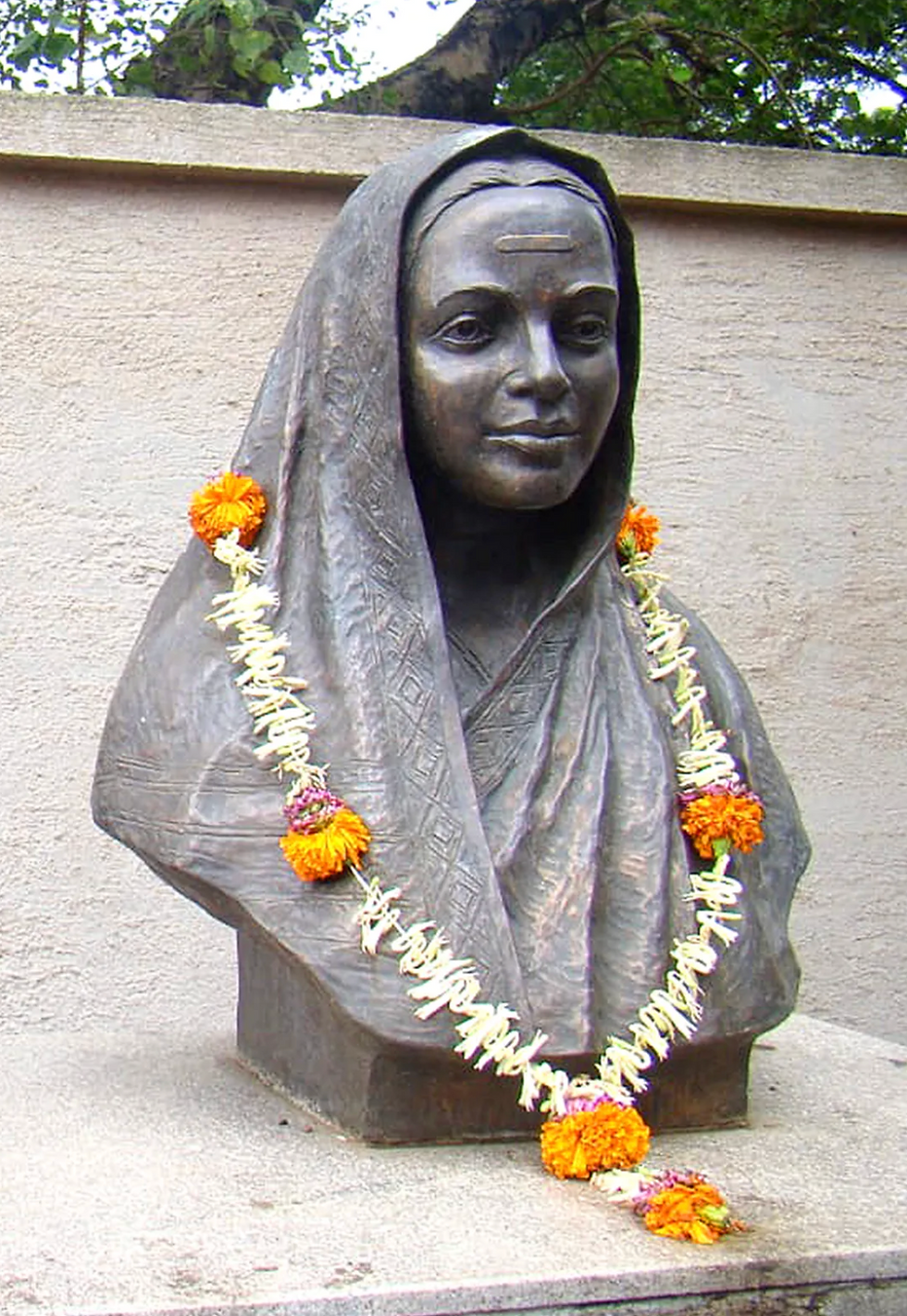
Savitribai revolutionized women’s education in the Maharashtra region of India, and is known to this day as the nation's mother of feminism. Savitribai was born into a very small village in India, and was the eldest daughter of a poor farming family. As was customary for her tribe, she was married at around ten years old to a young boy named Jyotirao, just a couple of years older than her. The couple worked on a farm to make money.
Like all the other girls in her village, Savitribai didn’t know how to read or write. She had been given a book as a gift from a visiting missionary, but could not read it. Her news husband had graduated from elementary school, so she asked him to teach her how to read.
As she learned, Savitribai discovered that she loved the feeling of learning something new. Once she learned the basics, she sought out her friends and asked them to teach her what they knew. From her husband and friends, she became literate in Hindi and English, and became so good that she could pass exams at the local English-language school.
From her own experience, Savitribai learned the difference that being literate brought to her life. She was determined to share what she had learned with others like her, those that grew up not knowing how to read or write. When she was still a teenager, Savitribai became the first certified female teacher in India.

In 1848, when Savitribai was 17, she and her husband established a school for poor girls in their neighborhood. Six students joined. It was one of the first schools for girls in the country. Both of their families were outraged at this, and Savitribai’s family threatened to cut her off if she continued in her goal. But she refused to stop. A couple of friends took in Savitribai and her husband, and gave them land to start their school.
Many powerful people were angry at Savitribai. They believed that poor women did not deserve to learn, and that educating them was useless. Educating poor girls would disrupt the caste system, a strict social system in India that dictated what each class of people was allowed to do. People tried to get Savitribai to give up. At the time even most rich women were barred from being educated. When Savitribai would walk to the school, angry people would throw rocks, mud, and dung at her. It got so bad that she started keeping extra clothes at the school that she could change into. But she never gave up.
Savitribai continued to teach at the school, empowering young poor girls to read and write. Once they had those, they could record their own thoughts, write poems and letters and novels, or read any books they could get their hands on. She started fundraising to give students stipends, paying them to go to school so they would not be forced to leave school in order to work. Learning to read and write meant they had a whole new world of information and ability open up to them.
Later in Life
Throughout her life, Savitribai opened eighteen schools for poor communities, including night schools for laborers who wanted to learn but did not have time during the day. She also opened shelters for widows, destitute women, and child brides. In her forties, Savitribai and her husband founded the Society of Truth Seekers to promote social equality. She and her husband continued to promote education and equality together. When he died in 1890, Savitribai continued on her own. Seven years later, when she was caring for victims of the bubonic plague, she also contracted the disease and passed away soon after.
Legacy
Her relentless, lifelong effort to promote education and equality in her community has inspired generations of leaders. A memorial in her honor stands in Pune, and the Savitribai Phule Award is given to pioneering women social reformers in Maharashtra. In 2014, the University of Pune, where Savitribai was from, was renamed Savitribai Phule Pune University.


Comments